
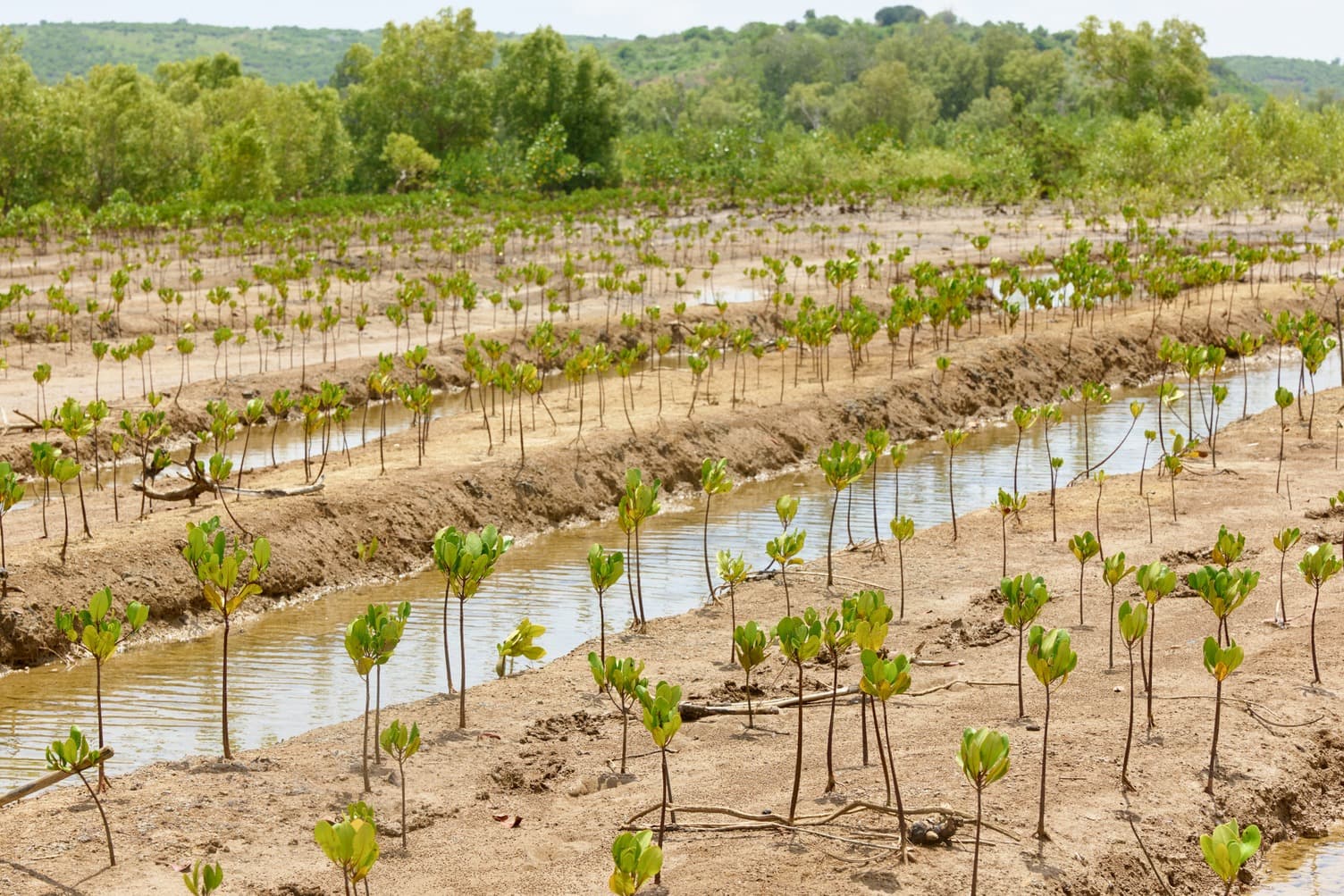
Eastern Africa Mangrove Restoration
VeritreeTrees Remaining
Mangrove forests are among Earth's most productive and carbon-rich ecosystems, storing up to 10 times more carbon per hectare than terrestrial forests. The Eastern Africa Mangrove Restoration project works with local communities along the coasts of Tanzania and Kenya to restore degraded mangrove habitats. Mangroves provide critical ecosystem services: protecting coastlines from storm surges and erosion, serving as nurseries for commercially important fish species, and supporting biodiversity including threatened bird species and marine life. This project plants a mix of mangrove species including Rhizophora mucronata (the dominant species), Avicennia marina (grey mangrove), and Ceriops tagal (yellow mangrove). These species are selected for their adaptation to local conditions and their high carbon sequestration potential. Based on Veritree's restoration methodology, each mangrove tree is estimated to capture approximately 0.31 tonnes (310 kg) of CO2 over its 30-year growth cycle. The project maintains an 80% survivability rate through community stewardship and regular monitoring. Planting activities occur during the optimal window of January through May, coinciding with favorable tidal and weather conditions along the East African coast.





Coordinates: -2.6910, 40.1959
*Model-based estimate; actual sequestration varies by site and conditions